Optical Fibers: Lighting Up Technology
You know those little glass fiber strands that carry data around the world at lightning speeds? They're called optical fibers, and they're a crucial part of modern technology. Without these little light transmitters, you couldn't stream movies, get real-time weather updates, or instantly connect with friends across the globe. Optical fibers send pulses of light through strands of glass as thin as a human hair, allowing huge amounts of data to travel over vast distances. The technology has revolutionized telecommunications and shaped how we live and work in the 21st century.
What Are Optical Fibers?
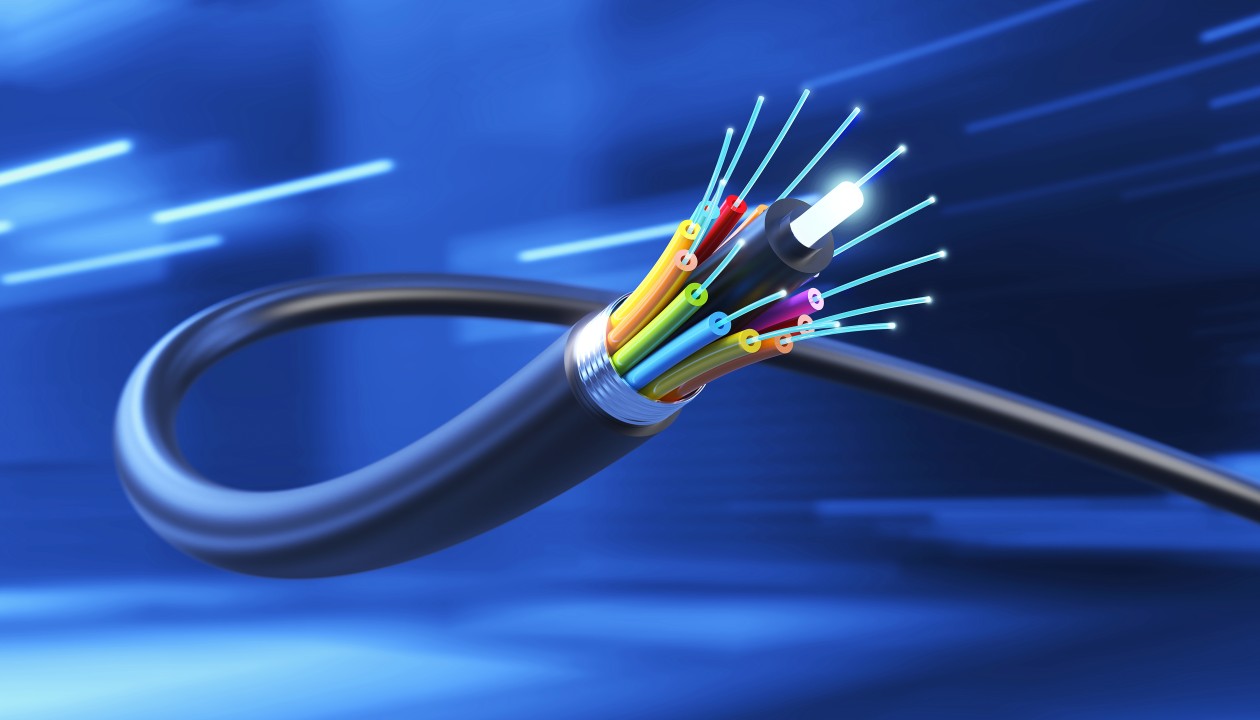
Optical fibers are thin strands of ultra-pure glass that transmit light signals over long distances. They are the backbone of modern telecommunications infrastructure.
How Do They Work?
Optical fibers work by containing light signals within the glass fiber. They have a core made of glass or plastic that acts as a waveguide to transmit light. The core is surrounded by a cladding layer with a lower refractive index that reflects the light back into the core, allowing it to travel over long distances.
Light is transmitted into the fiber using a light-emitting diode (LED) or laser diode. The light bounces down the fiber through total internal reflection.
Optical fibers transmit information in the form of light pulses. By flashing the light on and off, information can be encoded and transmitted.
Optical fibers have revolutionized communications by enabling high-speed, long-distance data transmission with low signal loss. A single optical fiber can carry tens of thousands of telephone calls or transmit high-definition videos over hundreds of miles.
Optical fiber communication works by using light to transmit phone calls, internet communication and cable TV signals. It has largely replaced copper wire communications and enabled our modern information age.
Optical fibers have transformed how we live and work by enabling high-speed global communication networks. Although tiny in size, they have had an enormously positive impact on the world. The future remains bright for these slender threads of glass.

How Do Optical Fibers Work?
Optical fibers are long, thin strands of ultra-pure glass that transmit light signals over long distances.
Light enters one end of the fiber, reflects off the inside walls of the fiber as it travels down its length, and emerges at the other end. The key to how optical fibers work is total internal reflection. This occurs when light travels from a medium with a higher refractive index to one with a lower refractive index. The glass in optical fibers has a higher refractive index than the air surrounding it.
When light rays strike the interface between the glass fiber and air at a shallow angle, they are reflected back into the fiber. This continues down the length of the fiber, with the light rays bouncing off the edge of the fiber at shallow angles. The light is thus transmitted down the fiber through many total internal reflections.
Optical fibers are amazing because they can transmit light signals with very little loss in intensity over long distances. The glass fibers are extremely transparent and the reflections that occur are very efficient. Optical fiber communication systems have revolutionized global communications thanks to their huge bandwidth, low noise, small size, and immunity to electromagnetic interference.
These long strands of glass have enabled high-speed internet, connected the world, and have become crucial parts of global telecommunications infrastructure. Who knew that such a simple material could change technology forever?
Types of Optical Fibers
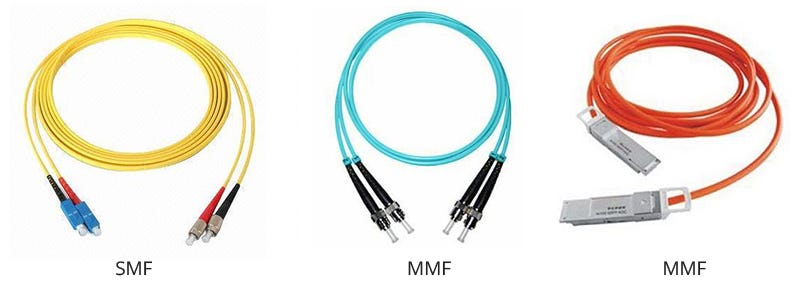
Optical fibers come in a variety of types, each suited for different applications. The three most common types are single-mode, multimode, and plastic optical fibers.
Single-mode fibers
Single-mode fibers have a very narrow core, allowing only one mode of light to propagate through them. They are best for long-distance, high-bandwidth applications like telecommunications because the tight beam of light suffers less dispersion over long distances. However, single-mode fibers require more expensive components like laser light sources and are more difficult to splice and terminate.
Multimode fibers
Multimode fibers have a larger core, allowing multiple modes of light to propagate through them simultaneously. They are best for shorter distances like data centers or office buildings. The wider beam of light disperses more over distance, limiting how far it can travel. However, multimode fibers are cheaper to produce and connect. Common types of multimode fibers are OM1, OM2, OM3 and OM4, which provide increasing bandwidth.
Plastic optical fibers
Plastic optical fibers, or POFs, are large core fibers made of flexible plastics like PMMA or PF. They are extremely inexpensive and easy to work with but suffer high signal loss over distance. POFs are mainly used for very short distance, low-speed applications like automotive networks or home/office setups.
In summary, the type of fiber used depends on factors like distance, required bandwidth, and budget. With continual improvements in production and materials, optical fibers are enabling our world to become increasingly connected at the speed of light.
Applications of Optical Fibers
Optical fibers have enabled so many technologies we now rely on every day. Once light enters an optical fiber, it can travel for miles with little loss in signal strength. This allows optical fibers to be used for high-speed, long-distance communication.
Telecommunications
Optical fibers are the backbone of telecommunications infrastructure, including telephone and internet networks. They carry voice, data, and video signals over vast distances at the speed of light. Without optical fibers, we wouldn’t have broadband internet access or crystal-clear international phone calls.
Medicine
Optical fibers have revolutionized medicine with technologies like endoscopes. An endoscope is a long, thin tube with optical fibers that carries light to illuminate a patient's internal organs and transmits images back to the doctor. Endoscopes are used for minimally invasive surgeries and diagnosing issues like stomach ulcers or colon cancer. Optical fibers have enabled great leaps forward in medical imaging, diagnosis, and treatment.
Sensors
Optical fibers can detect changes in light to sense environmental conditions like temperature, pressure, and sound. They are often bundled into cables and used for monitoring pipelines, dams, and structural integrity in buildings. Optical fiber sensors are valued for their immunity to electromagnetic interference, high sensitivity, small size, and ability to detect changes over long distances.
Lighting and Displays
Some optical fibers are designed to emit light along their length and are used for decorative lighting, signage, and display panels. The fibers can be woven into fabrics for an ethereal, futuristic look. They provide an efficient way to illuminate spaces with a soft, diffuse glow. Optical fibers have brought a whole new dimension to architectural and interior lighting design.
Optical fibers have transformed industries and connected the world in ways never before imagined. They are an enabling technology behind many of the communication and connectivity innovations we now rely on every day. The future remains bright for continued progress in developing and applying this revolutionary technology.
The Future of Optical Fiber Technology
Optical fiber technology has come a long way, but the future remains bright. As demand for faster broadband and more data grows, optical fibers will continue to expand their reach.
Increased Bandwidth
New techniques are allowing engineers to pack more data into each optical fiber. One approach, wavelength division multiplexing or WDM, combines multiple optical signals on a single fiber by using different wavelengths of light. Another technique called space division multiplexing uses multiple fiber cores in one cable to increase bandwidth. These methods can increase a single fiber’s data capacity by orders of magnitude.
Faster Speeds
Researchers are working to develop optical fibers that can transmit data at 100 terabits per second, far surpassing today’s fastest speeds. New materials like hollow-core fibers with photonic crystal lattice structures allow light to travel faster by reducing interactions with the material. New modulation techniques are also being developed to encode more data into each pulse of light.
Expanded Applications
In the future, optical fibers may connect not just homes and data centers but also vehicles, appliances, and medical devices. As costs decrease and production increases, optical fibers could replace copper wiring for power grids, enabling smart grid technologies. Optical fibers may even connect processors within computers, allowing faster data exchange.
Global Access
There are still many parts of the world without broadband access. As optical fibers become more affordable and compact, they may provide internet connectivity to remote or impoverished areas. SpaceX’s Starlink constellation aims to provide global high-speed, low latency internet service using a network of thousands of satellites connected by laser links. Facebook and Google also have plans for bringing more people online through optical technologies.
The future is bright for this fundamental technology that has already revolutionized global communication networks. Continued innovation in optical fibers will light up access to information and connectivity across the planet.
Conclusion
So there you have it - optical fibers are revolutionizing the way we live and work. Light traveling through thin glass strands is connecting all of us at the speed of, well, light. Next time you stream your favorite show, download an app, or video chat with a friend across the world, take a second to appreciate the optical fibers making it all possible. Technology is amazing, and optical fibers are helping it spread at warp speed. The future is bright, fast and made of glass. Who knew that such an unassuming material with a light touch could have such an enormous impact? Optical fibers are lighting up technology and transforming our world one photon at a time. The future is fiber.


Comments
Post a Comment